Key takeaways
- Inspection is only as good as the written agreement: approved sample, colour range, tolerances and defect definition.
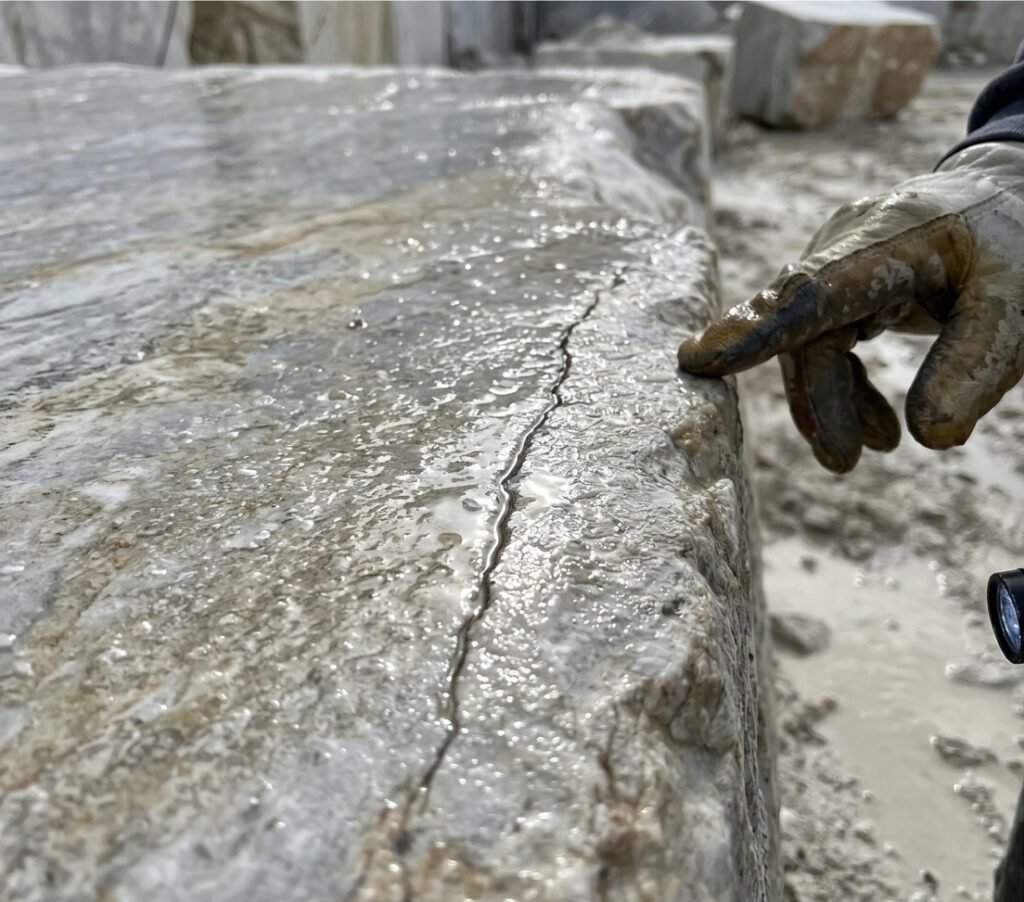
- Wet the surface to spot cracks; check resin, finish, thickness and flatness on a random sample.
- For floors, stairs and façades, request recent test reports under EN 12057, EN 12058 or EN 1469.
- Check packing, marking and the packing list before the container is sealed.
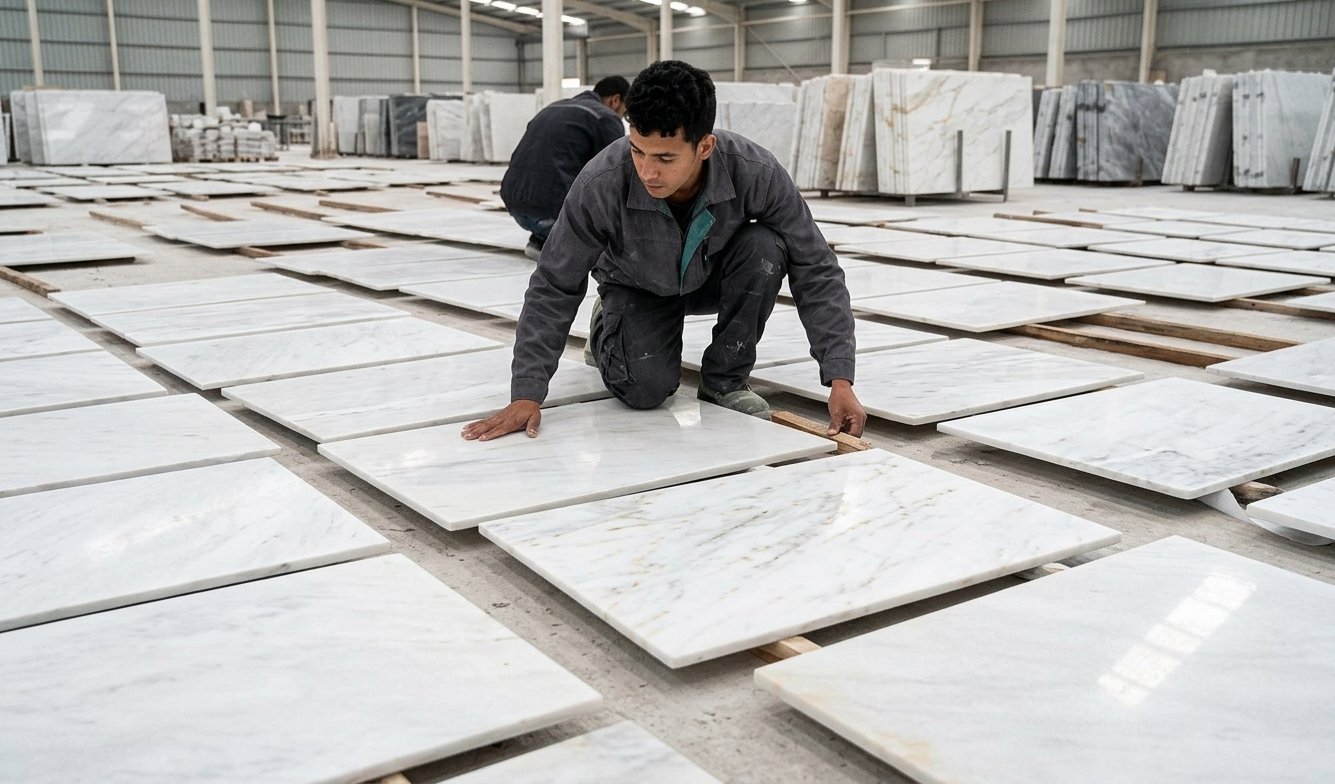
Short answer: agree an approved sample and colour range before production, then check the actual material against it before loading. Inspect colour and veining, cracks and filled areas, finish, thickness, flatness and dimensions, and packing. For floors, stairs and façades, also ask for the producer’s test reports.
Why does marble need checking before shipment?
Marble is a natural material and no two blocks are the same. Colour, veining and the number of natural defects change within one quarry, sometimes within one block. Once the container is sealed, fixing a problem costs far more than catching it at the factory. A structured check, with photos, protects both the buyer and the producer.
What should be agreed before production?
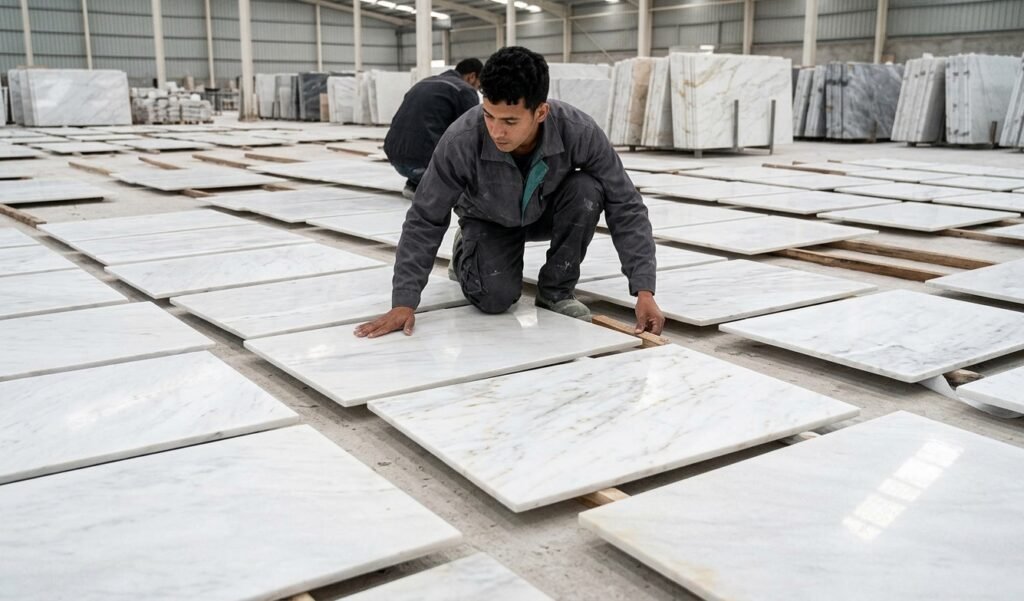
The basis of every inspection is what was agreed in writing. Before production starts, fix these points:
- Stone name and quarry, with a physical sample approved by you
- Approved colour range, ideally two or three samples from light to dark
- Finish: polished, honed, brushed, leathered, tumbled or other
- Thickness, sizes and tolerances
- Quality grade and what counts as a defect
- Whether resin filling and mesh backing are acceptable
- Packing method and marking
What do you check on the material itself?
| Check | How | What to look for |
|---|---|---|
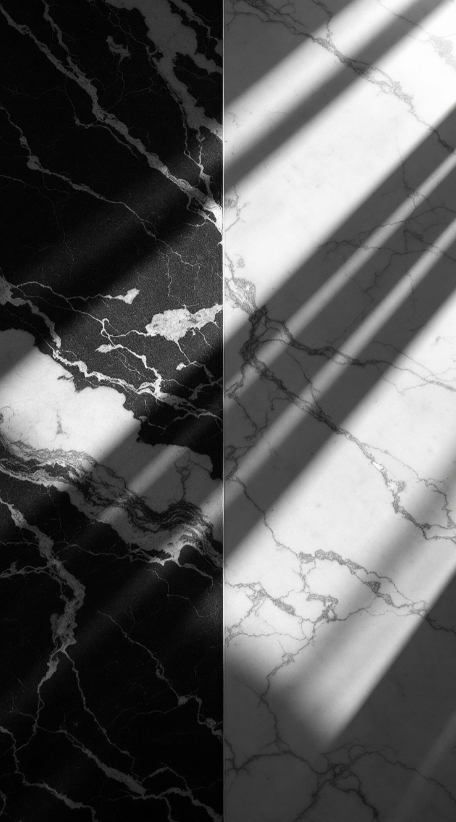
| Colour and veining | Lay slabs or a sample of tiles side by side in daylight | Pieces outside the approved range, abrupt changes between bundles or crates |
| Cracks and fissures | Wet the surface; cracks show more clearly when wet | Open cracks, cracks crossing the full piece, cracks near edges or anchor points |
| Resin and filling | Look at the surface at a low angle | Excessive resin, unfilled holes on travertine, filler that differs in colour |
| Finish | Compare with the sample; check gloss on polished pieces | Dull patches, scratches, uneven honing |
| Dimensions and thickness | Measure a random sample of pieces with a calliper and tape | Values outside the agreed tolerance |
| Flatness and edges | Straight edge across the surface; check corners | Bowing, chipped corners, uneven bevels |
Which test reports should you ask for?
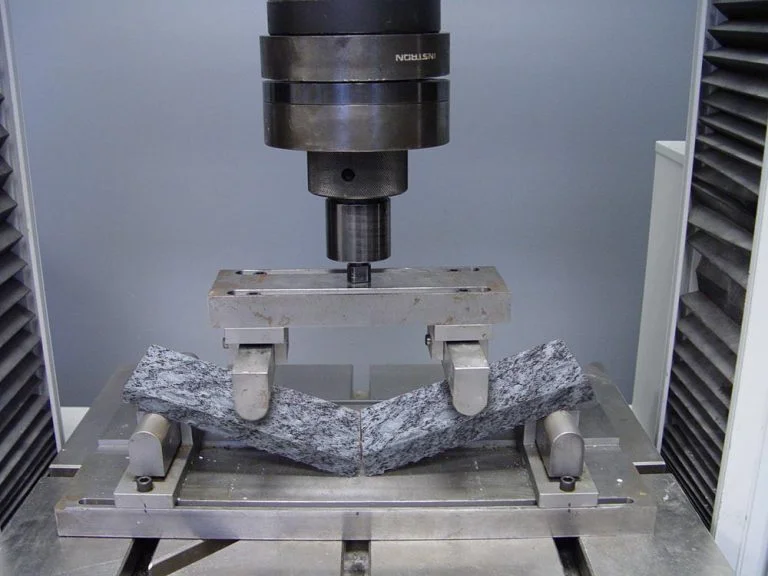
For decorative interior walls, visual checks are often enough. For floors, stairs, exterior paving and façades, the stone’s technical properties matter. In Europe, the product standards are EN 12057 for modular tiles, EN 12058 for slabs used in floors and stairs, and EN 1469 for cladding slabs. They refer to tests such as flexural strength, water absorption, apparent density, frost resistance and, for façades, the breaking load at the dowel hole. Ask the producer for recent reports from an accredited laboratory and check that they relate to the stone you are buying.
How should the packing be checked?
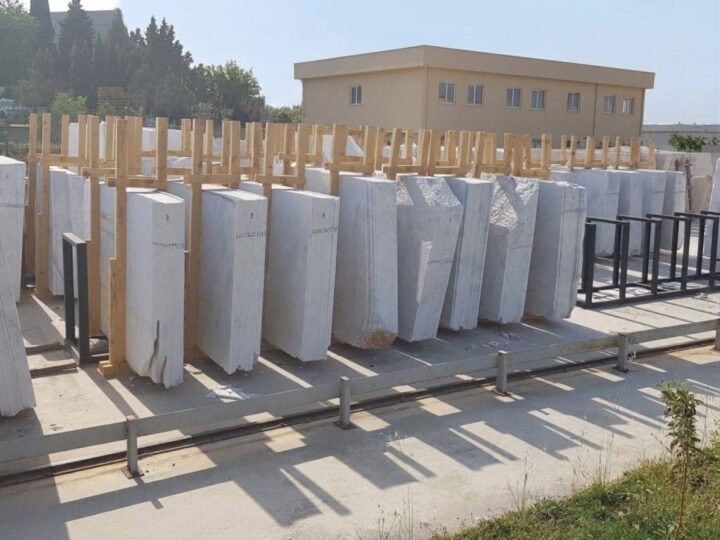
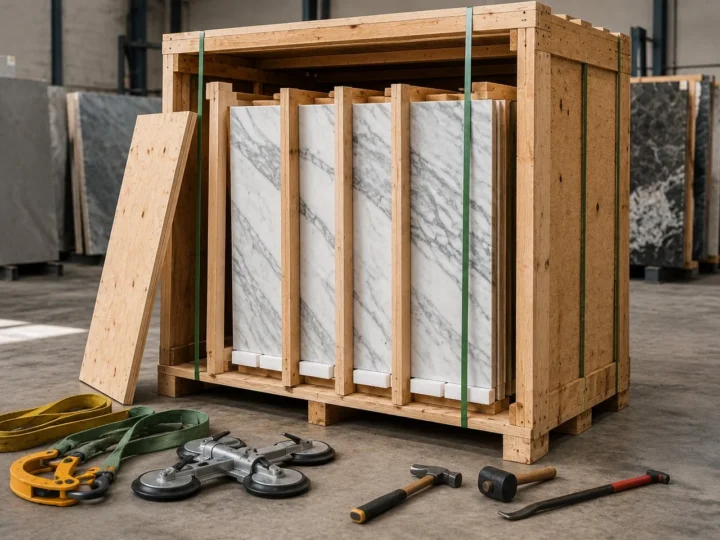
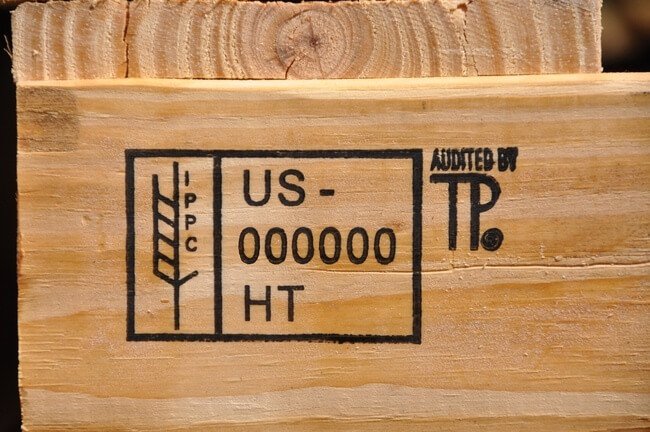
Packing is part of quality. Slabs travel in A-frames or bundles, strapped and separated; tiles and cut-to-size pieces in wooden crates with protection between faces. Wooden packing for export should carry the ISPM 15 mark. Check that crates are marked with the content, quantity and, for projects, the area or piece numbers, and that the packing list matches.
Common mistakes and how to avoid them
- No written defect definition. Agree in advance what is acceptable; otherwise every discussion becomes subjective.
- Checking only the top slabs. Ask for photos of every slab or a random sample from different crates.
- Old or unrelated test reports. A report for a different quarry or a test from many years ago tells you little.
- Inspecting after loading. Inspection must happen before the container is sealed.
How VDA helps
We agree the approved samples and colour range with you, follow production at our partner factories and send photos of the actual slabs or crates before loading. You can also visit the factory or appoint an independent inspector. Explore our slabs, tiles, stairs and sills and cut-to-size projects, or share your project brief on any of these pages.
Sources
- EN 12057:2015 Natural stone products – Modular tiles – Requirements.
- EN 12058:2015 Natural stone products – Slabs for floors and stairs – Requirements.
- EN 1469:2015 Natural stone products – Slabs for cladding – Requirements.
- IPPC, ISPM 15 Regulation of wood packaging material in international trade.
Frequently asked questions
Do I need a third-party inspector?
Not always. For standard orders, photos of the actual material against the approved sample are often enough. For large projects or high-value stone, an independent inspector adds a second check.
Is resin on marble a defect?
Not by itself. Resin is commonly used to strengthen slabs and fill natural holes. It becomes a problem when it is excessive, visibly different in colour or not agreed in advance.
How many pieces should be measured?
Agree a random sample from different crates before inspection. The aim is to cover all blocks and sizes in the order, not only the first crate.
Which tests matter for an exterior façade?
Flexural strength, water absorption, frost resistance where relevant and the breaking load at the dowel hole, as covered by EN 1469.