

Bitumen emulsion plant
Colloid mill plants that produce cationic and anionic bitumen emulsions for tack coat, prime coat, chip seal, slurry and cold mix.
- Product
- Cationic and anionic emulsions
- Bitumen content
- Typically 55 to 75%
- Core unit
- Colloid mill
- Operation
- Batch or continuous (in-line)
Indicative figures based on manufacturer data. Capacity and specification are confirmed in each offer.
What is a bitumen emulsion plant?
A bitumen emulsion plant disperses hot bitumen into water as very fine droplets, using an emulsifier and a high-speed colloid mill. The result is a brown liquid that can be sprayed or mixed at low temperature and later “breaks”, leaving a bitumen film on the road surface. Asphalt emulsions typically contain about 55 to 75% bitumen and 0.1 to 2% emulsifier, with water making up the rest.
Emulsions are used for tack coat, prime coat, chip seal, slurry seal and microsurfacing, cold mix, dust control and cold recycling. Because they are applied cold, they need less energy on site than hot bitumen.
Cationic or anionic emulsion?
The type depends on the emulsifier. Cationic emulsions (positively charged, usually amine-based) bond well with most aggregates, including siliceous stone, and are widely used today. Anionic emulsions (negatively charged) suit some limestone aggregates. Each type is made as rapid, medium or slow setting depending on how quickly it must break.
How emulsion is made
Heat the bitumen
Bitumen is heated to lower its viscosity for milling.
Prepare the soap
Water is warmed and mixed with emulsifier and acid or alkali to make the soap solution.
Mill
Bitumen and soap are fed in exact ratio into the colloid mill, which shears bitumen into fine droplets.
Store
Emulsion is cooled and pumped to storage tanks with gentle agitation.
Test and load
Samples are checked for viscosity, residue and stability before loading into tankers or IBCs.
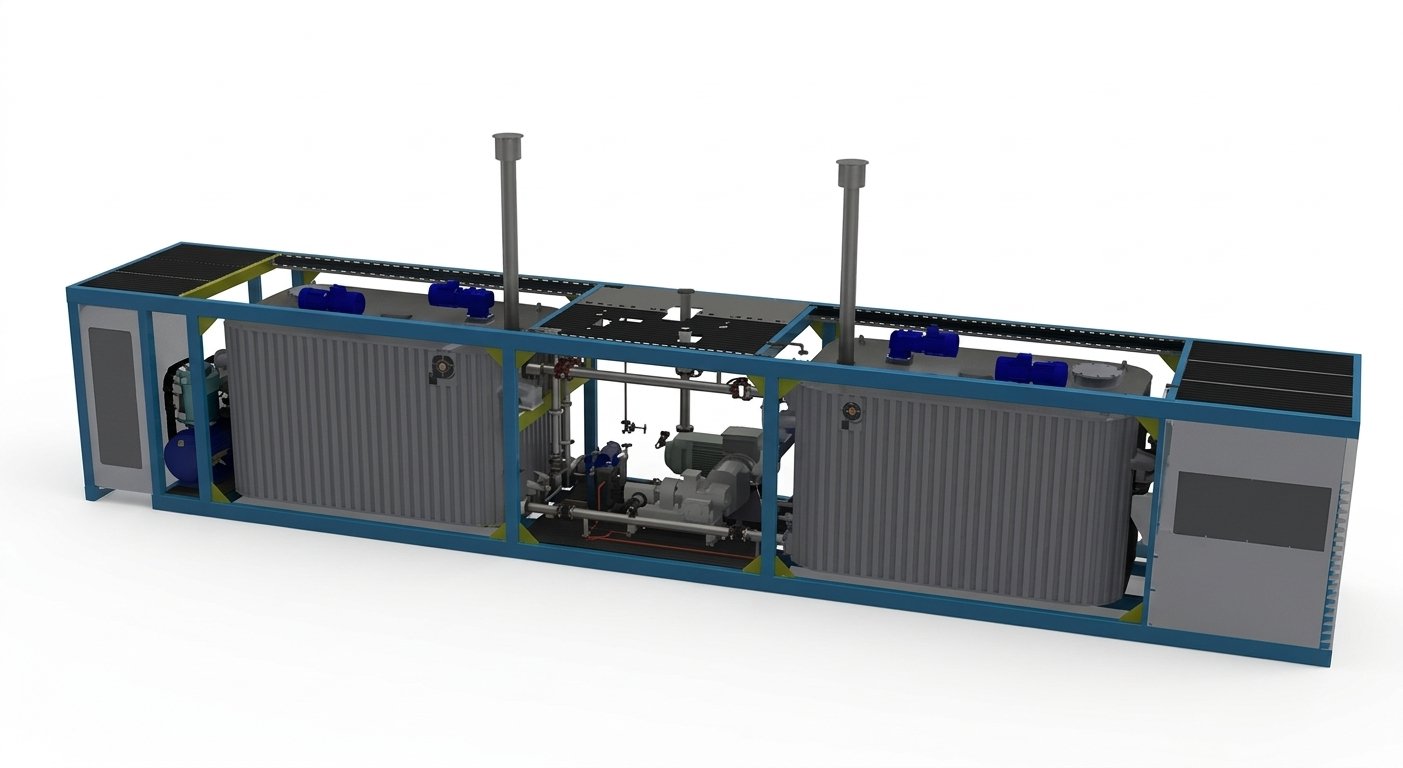
Main units
Bitumen heating tank
Heated tank that feeds bitumen to the mill at milling temperature.
Soap preparation tanks
Tanks with mixers and heating for emulsifier solution, often two for continuous production.
Colloid mill
High-speed rotor and stator that create the droplet size.
Dosing pumps and flow meters
Hold the bitumen to soap ratio constant.
Emulsion storage tanks
Tanks with slow agitation to keep emulsion stable.
Control panel
Recipe and ratio control with flow and temperature monitoring.
Specifications
Typical values from manufacturer documentation. Final figures are confirmed in the manufacturer's offer for your project.
| Emulsion types | Cationic and anionic; rapid, medium and slow setting |
|---|---|
| Bitumen content | Typically 55 to 75% |
| Emulsifier | Typically 0.1 to 2% |
| Mill | Colloid mill |
| Production mode | Batch soap or continuous in-line |
| Capacity | Selected to daily demand; confirmed per offer |
Composition ranges from industry references. Plant capacity and options are confirmed in the manufacturer's offer.
Built for these buyers
Road maintenance contractors
Make tack coat, chip seal and slurry emulsions on demand.
Bitumen distributors
Add emulsion to the product range for local markets.
Public road agencies
Supply emulsion to maintenance teams across a region.
Questions buyers ask
What is bitumen emulsion used for?
Tack coat and prime coat, chip seal, slurry seal and microsurfacing, cold mix asphalt, dust suppression and cold recycling.
How much bitumen is in an emulsion?
Typically 55 to 75% by weight, with 0.1 to 2% emulsifier and water making up the rest. The exact content depends on the grade being produced.
What is the difference between cationic and anionic emulsion?
Cationic emulsions carry a positive charge and use amine emulsifiers; anionic emulsions carry a negative charge and use fatty acid or lignin emulsifiers. Cationic types bond well with a wider range of aggregates.
What does a colloid mill do?
It shears hot bitumen into very fine droplets between a fast-turning rotor and a stator, so the emulsifier can keep them suspended in water.
How long can bitumen emulsion be stored?
Emulsion is stored in tanks with gentle agitation and protected from freezing and overheating. Storage life depends on the grade and the emulsifier; your emulsifier supplier gives the limits.
Related machinery
Polymer Modified Bitumen (PMB) Plant
Plants that blend SBS, SBR or EVA polymer into hot bitumen with a high-shear mill and maturation tanks, for heavy-traffic and hot-climate…
View details
Heated Bitumen Storage Tank
Insulated vertical and horizontal bitumen tanks with thermal oil, electric or steam heating, for asphalt plants, terminals and distributors.
View details
Thermal Oil Heater for Bitumen
Hot oil heaters that circulate thermal fluid through tanks, pumps and pipelines to keep bitumen and fuel oil at working temperature.
View detailsRead before you buy
Get offers for Bitumen Emulsion Plant
- Tell us the product, capacity and project country.
- We clarify the technical scope with you.
- You receive offers from suitable manufacturers to compare.
- Prefer WhatsApp? +90 543 797 58 57