

Compact concrete sleeper production plant
A crane-served sleeper plant for project-based production and a lower initial investment. Four-gang moulds move between a tensioning station, a vibration table and a demoulding station with an overhead crane, so the line fits a single hall and can grow with more moulds.
- Production method
- Crane-served moulds
- Sleepers per mould
- 4
- Moulds (example)
- 10 four-gang moulds
- Mould handling
- Overhead crane, 6 t
- Capacity
- Defined per project
Indicative figures based on manufacturer data. Capacity and specification are confirmed in each offer.
How a compact plant works
A compact plant follows the same prestressed process as a carrousel line, but the moulds are moved between stations by an overhead crane instead of conveyors. Moulds are cleaned and oiled, dowels and button-headed prestressing wires are placed, the wires are tensioned, and the mould is filled on a vibration table. After curing and de-tensioning, the crane turns the mould over and the sleepers are released onto the demoulding conveyor.
Each mould holds four sleepers. Wires are fitted with anchor plates and tie rods, tensioned one cavity at a time by a tensioning machine with four cylinders, and released together on both sides after the concrete reaches the required strength.
Why buyers choose a compact plant
- Lower initial investment. Fewer moulds and no mould conveyor system, with the overhead crane doing the transfers.
- Fast set-up. In one delivered configuration the equipment was manufactured in about three months and assembled on site in about ten days.
- Room to grow. Output rises by adding moulds and curing space, without changing the core stations.
- Same sleeper quality. Concrete, prestressing steel and curing follow the sleeper standard of your project, for example EN 13230.
- Training included in the scope. Operators and the maintenance team can be trained during test production.
A plant of this type in Zambia
VDA sourced a compact plant of this type for a railway project in Zambia. See the References page for the project.

How the line works
Mould cleaning and oiling
Moulds are cleaned of concrete residue and sprayed with release agent.
Dowels and reinforcement
Dowels are mounted on the dowel holders. Each sleeper uses 8 prestressing wires, Ø7 mm and 2,510 mm long, button-headed and fitted with anchor plates.
Tensioning
The tensioning machine tensions the tie rods of one cavity at a time with four cylinders working together.
Casting and vibration
The mould is filled on the vibration table, which compacts the concrete and removes air voids.
Curing
Moulds are stacked in the curing room. Concrete temperature is monitored and held within the limits of the sleeper standard.
De-tensioning and demoulding
When test cubes confirm the release strength, the wires are released on both sides. The crane turns the mould 180 degrees and the sleepers go to the stockyard.
Main machines and systems
Four-gang sleeper moulds
Steel moulds designed from your sleeper drawing, supplied with tie rods and bolts.
- Sleepers per mould
- 4
- Example scope
- 10 moulds
Tensioning machine
One tensioning head with four cylinders tensions the tie rods of one cavity at the same time. Supplied with its steel frame, hydraulic unit and electric panel.
- Tensioning force
- 320 kN at 250 bar
De-tensioning machines
Release the prestressing force on all tie rods of a mould at the same time, on both sides.
- Example scope
- 2 machines
Button heading machine
Forms the anchor heads on the prestressing wires after the anchor plates are fitted. Supplied with its hydraulic unit.
Vibration table
Compacts the concrete during casting so the sleepers have no air voids.
Demoulding table and turning frame
A turning frame on the crane rotates the mould 180 degrees and releases the sleepers onto the demoulding table.
Specifications
Typical values from manufacturer documentation. Final figures are confirmed in the manufacturer's offer for your project.
| Concrete class | C50/60 |
|---|---|
| Cement | CEM I 42.5 R or 52.5 R (EN 197-1) |
| Aggregate | Max. 22 mm (EN 12620) |
| Prestressing steel | Ø7 mm wire, 1570 N/mm², low relaxation (EN 10138-2) |
| Wires per sleeper | 8 × 2,510 mm |
| Anchor plates per sleeper | 4 |
| Nuts per sleeper | 8 × M16 |
| Release strength | 45 MPa |
| Tensioning force | 320 kN at 250 bar |
| Power supply | 400 V / 50 Hz |
| Compressed air | 6 bar |
| Mould handling | Overhead crane, 6 t (by buyer) |
Values from one delivered configuration. Sleeper design, number of moulds and capacity are defined for each project.
Built for these buyers
Rail infrastructure contractors
Contractors who need sleepers produced near one corridor project.
Precast producers
Companies adding railway sleepers with a controlled first investment.
Railway project owners
Owners who want local sleeper production for a new or rehabilitated line.
Plants planning to scale
Producers who want to start compact and add moulds as orders grow.
Related machinery

Turnout Sleeper Production Plant
A long-line plant for prestressed concrete turnout bearers. Every bearer in a turnout set has its own length and fastening positions, so…
View details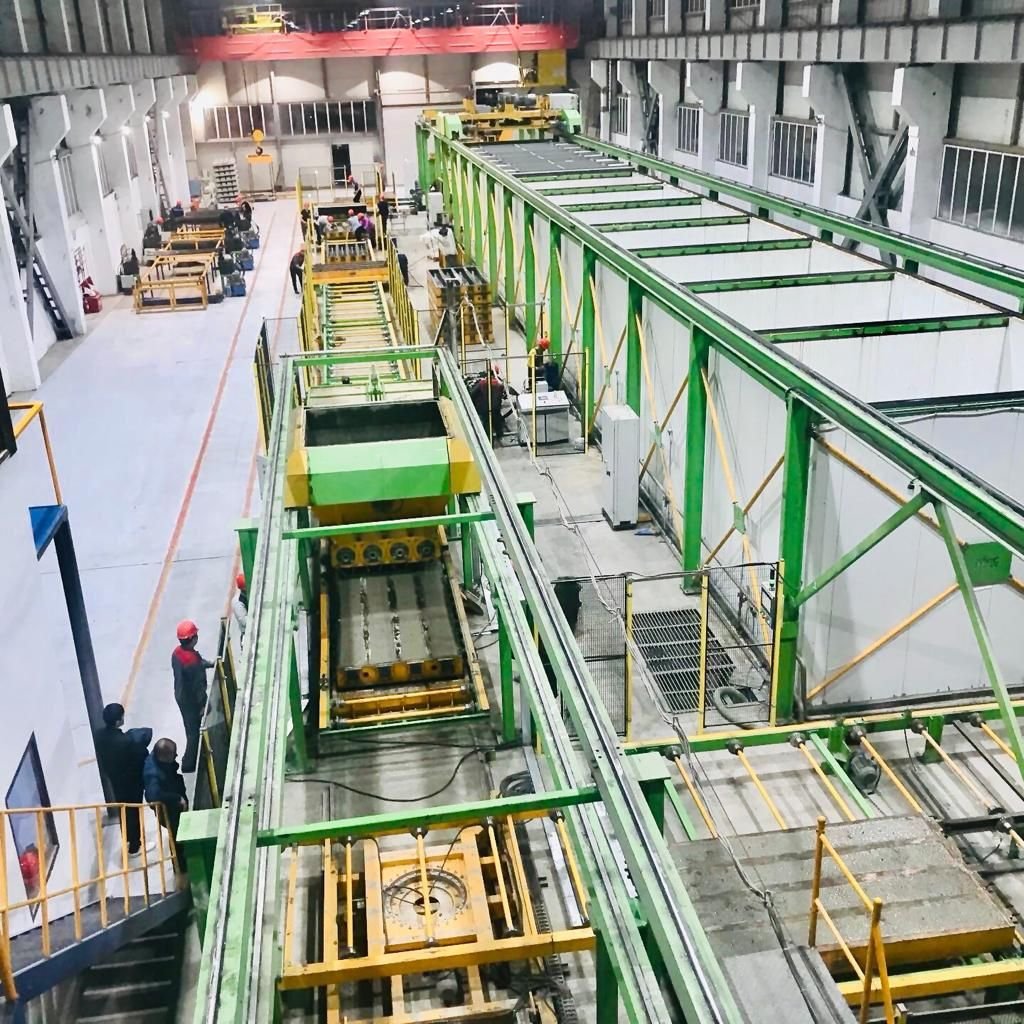
Carrousel Concrete Sleeper Plant
A carrousel plant moves sleeper moulds through fixed stations for cleaning, tensioning, concreting, curing and demoulding. It suits high-volume prestressed sleeper production,…
View details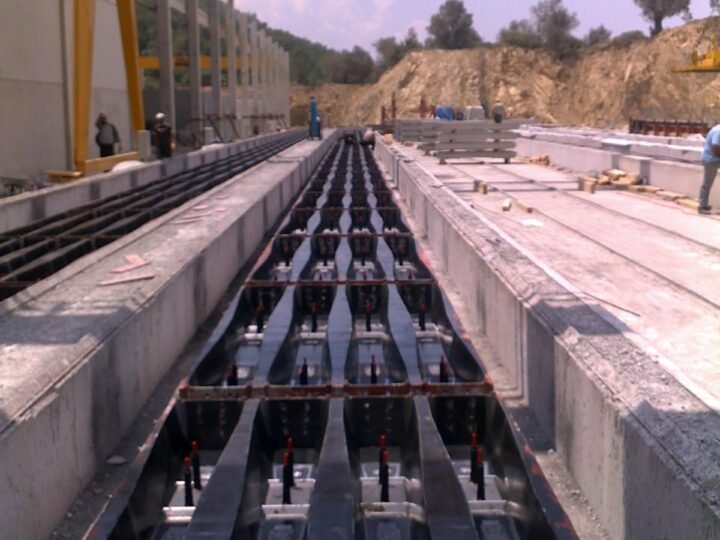
Long-line Concrete Sleeper Plant
Long prestressing beds where sleepers are cast in a continuous line and saw cut after curing. A lower-investment route for uniform sleeper…
View detailsRead before you buy
Get offers for Compact Concrete Sleeper Plant
- Tell us the product, capacity and project country.
- We clarify the technical scope with you.
- You receive offers from suitable manufacturers to compare.
- Prefer WhatsApp? +90 543 797 58 57