
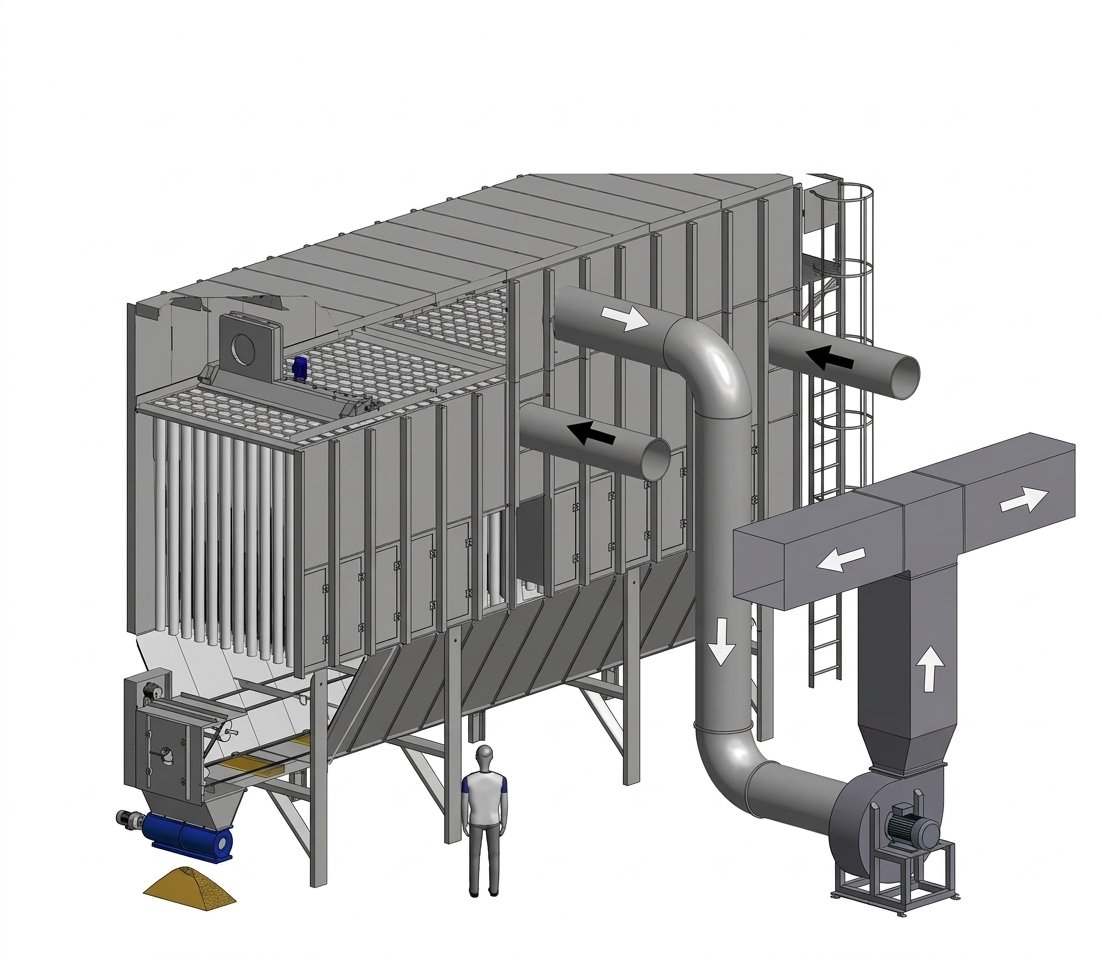
Asphalt plant baghouse filter
Fabric bag filters that capture dryer dust before exhaust leaves the stack and return the fines to the mix as filler.
- Function
- Dust collection from dryer exhaust
- Cleaning
- Pulse jet or reverse air
- Bags
- Heat-resistant aramid fabric
- Dust
- Returned to mix as filler
Indicative figures based on manufacturer data. Capacity and specification are confirmed in each offer.
What is a baghouse filter?
A baghouse is the dust collector of an asphalt plant. Exhaust gas from the dryer, full of fine dust, is drawn by a fan through hundreds of fabric filter bags. Dust stays on the outside of the bags and clean gas leaves through the stack. A pre-separator ahead of the bags removes coarse particles, and the collected fines are returned by screw conveyor to the filler system so they become part of the mix.
How effective is a bag filter?
US EPA emission factors for batch plants show filterable particulate falling from about 32 lb per ton of asphalt uncontrolled to about 0.025 lb per ton with a fabric filter, a reduction of more than 99.9%. That is why bag filters are the standard choice where emission limits apply.
How are the bags cleaned?
Bags are cleaned during operation by short pulses of compressed air or by reverse air flow, which flex the fabric and drop dust into the hoppers. Aramid (Nomex-type) bags are common because they tolerate the high gas temperatures found at asphalt plants.
Main parts
Pre-separator
Drops out coarse dust before the bag chamber.
Bag chamber and filter bags
Housing with heat-resistant bags on support cages.
Cleaning system
Pulse jet valves or reverse air fan with timer or differential pressure control.
Exhaust fan and stack
Draws gas through the plant; often frequency controlled.
Dust screws and filler return
Carry recovered fines to the filler elevator or silo.
Temperature protection
Fresh-air damper and sensors that protect bags from overheating.
Specifications
Typical values from manufacturer documentation. Final figures are confirmed in the manufacturer's offer for your project.
| Cleaning | Pulse jet or reverse air |
|---|---|
| Bag fabric | Aramid (Nomex-type) or equivalent |
| Pre-collector | Inertial separator or cyclone |
| Typical PM reduction | More than 99.9% versus uncontrolled (US EPA AP-42) |
| Size | Matched to dryer gas volume; confirmed per offer |
Local emission limits should be shared with your RFQ so the filter can be sized to meet them.
Built for these buyers
Plants facing emission rules
Replace wet scrubbers or old filters to meet limits.
New plant buyers
Size the filter to dryer output and local regulation.
Questions buyers ask
What does a baghouse do in an asphalt plant?
It filters dust out of the dryer exhaust before it reaches the stack and returns the collected fines to the mix as filler.
How efficient is an asphalt plant bag filter?
US EPA data for batch plants shows particulate emissions falling from about 32 to about 0.025 lb per ton of asphalt with a fabric filter, more than 99.9% reduction.
What material are asphalt plant filter bags made of?
Usually aramid (Nomex-type) felt, which tolerates the high gas temperatures and the dust of asphalt plants.
How often should filter bags be replaced?
It depends on operating hours, temperature control and cleaning. Rising pressure drop or visible stack dust are signs that bags need inspection. Replacement bags are available through our spare parts line.
Pulse jet or reverse air: which is better?
Both work. Pulse jet systems clean bags with compressed air during operation; reverse air systems use a separate fan and need no compressed air.
Related machinery

Asphalt Plant Rotary Dryer & Burner
Rotary drum dryers with burners that remove moisture from aggregate and heat it to mixing temperature, for new plants or as replacements.
View details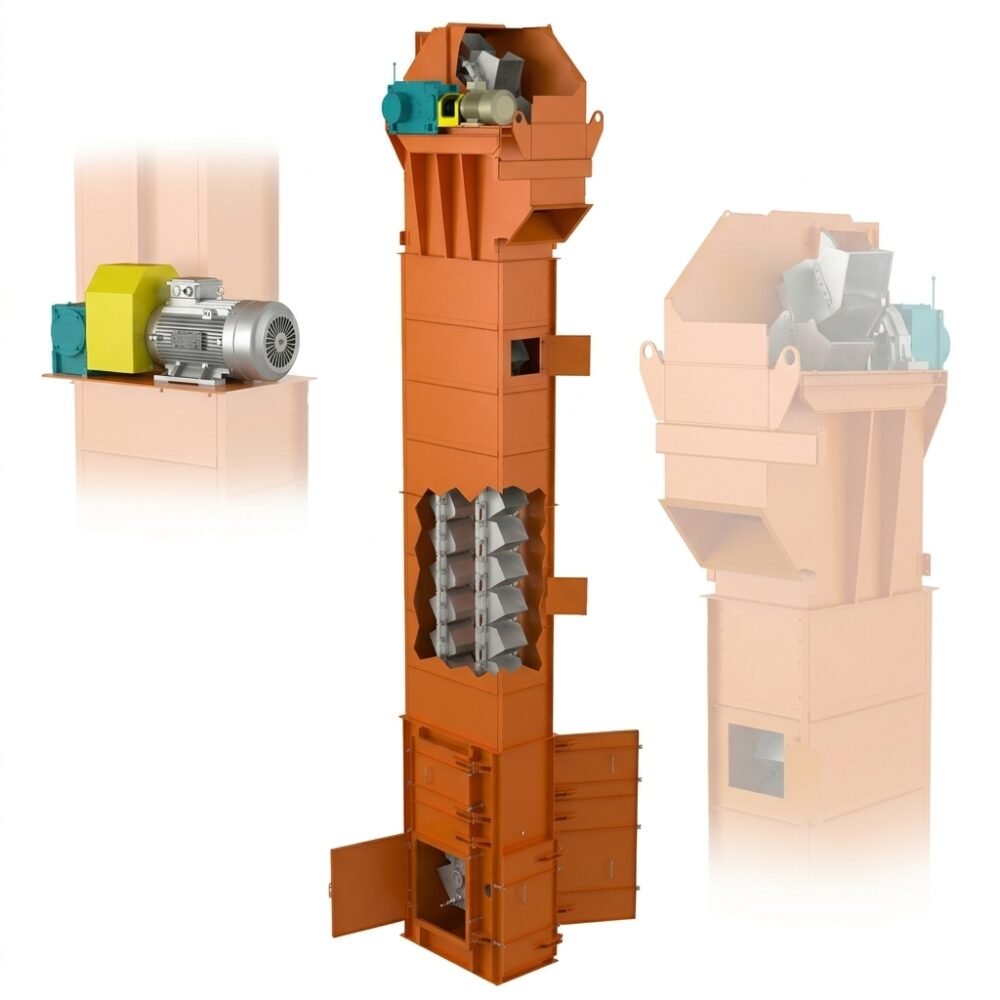
Hot Aggregate & Filler Bucket Elevators
Chain bucket elevators that lift hot aggregate to the screen and filler to its silo, built for heat, abrasion and continuous duty.
View details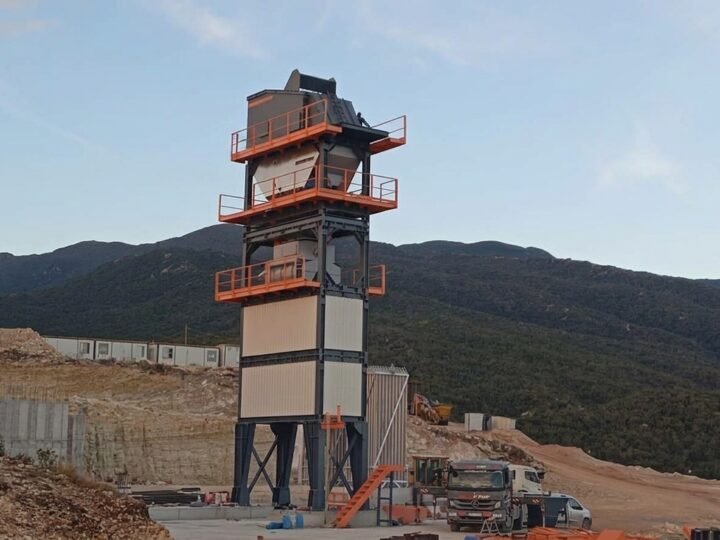
Stationary Batch Asphalt Plant
Fixed batch-type hot mix asphalt plants from 60 to 400 t/h. Every batch is weighed, so recipes change quickly and mix quality…
View detailsGet offers for Asphalt Plant Baghouse Filter
- Tell us the product, capacity and project country.
- We clarify the technical scope with you.
- You receive offers from suitable manufacturers to compare.
- Prefer WhatsApp? +90 543 797 58 57