Key takeaways
- Every asphalt plant does the same core jobs: feed and proportion aggregate, dry and heat it, collect the dust, add bitumen, mix, and load out.
- Batch plants screen hot aggregate into bins and mix it in a twin-shaft pugmill, typically 900 to 4,500 kg per batch. They can change the mix from one truckload to the next.
- Drum mix plants mix continuously in or after the dryer. Most new plants built in the US are counterflow drum plants.
- Aggregate moisture sets real output. Dryers are usually rated at about 5% moisture; wetter aggregate means less tonnes per hour.
- Hot mix is typically produced at about 138 to 171 °C (280 to 340 °F). Warm mix technologies lower this by 20 to 30 °C.
- Choose the plant by the mixes your specification calls for, how often you change mixes, how often you move, your local fuel, and your aggregate moisture.
An asphalt plant dries and heats aggregate, then coats it with hot bitumen to make hot mix asphalt for roads. Aggregate (and any reclaimed asphalt) makes up more than 92% of the mix by weight. There are two main plant types: batch plants, which weigh and mix one batch at a time, and drum mix plants, which mix continuously inside the dryer drum.
What does an asphalt plant do?
An asphalt plant turns cold, damp aggregate and bitumen into a hot, uniform mix that meets a job mix formula. According to the US asphalt industry’s paving handbook, every plant performs the same six operations, whatever its type:
- Storing and handling the raw materials
- Proportioning and feeding aggregate to the dryer
- Drying and heating the aggregate to the required temperature
- Controlling and collecting dust from the dryer
- Proportioning and mixing bitumen and additives with the hot aggregate
- Storing, weighing and loading out the finished mix
Aggregate and reclaimed asphalt pavement (RAP) make up more than 92% of hot mix by weight, according to the US Environmental Protection Agency. Bitumen is the rest. This is why aggregate handling and drying decide most of a plant’s size, energy use and output.
The scale is large. In 2024, wider Europe, including Türkiye, produced 268.7 million tonnes of hot and warm mix asphalt, according to the European Asphalt Pavement Association (EAPA).
What are the main components of an asphalt plant?
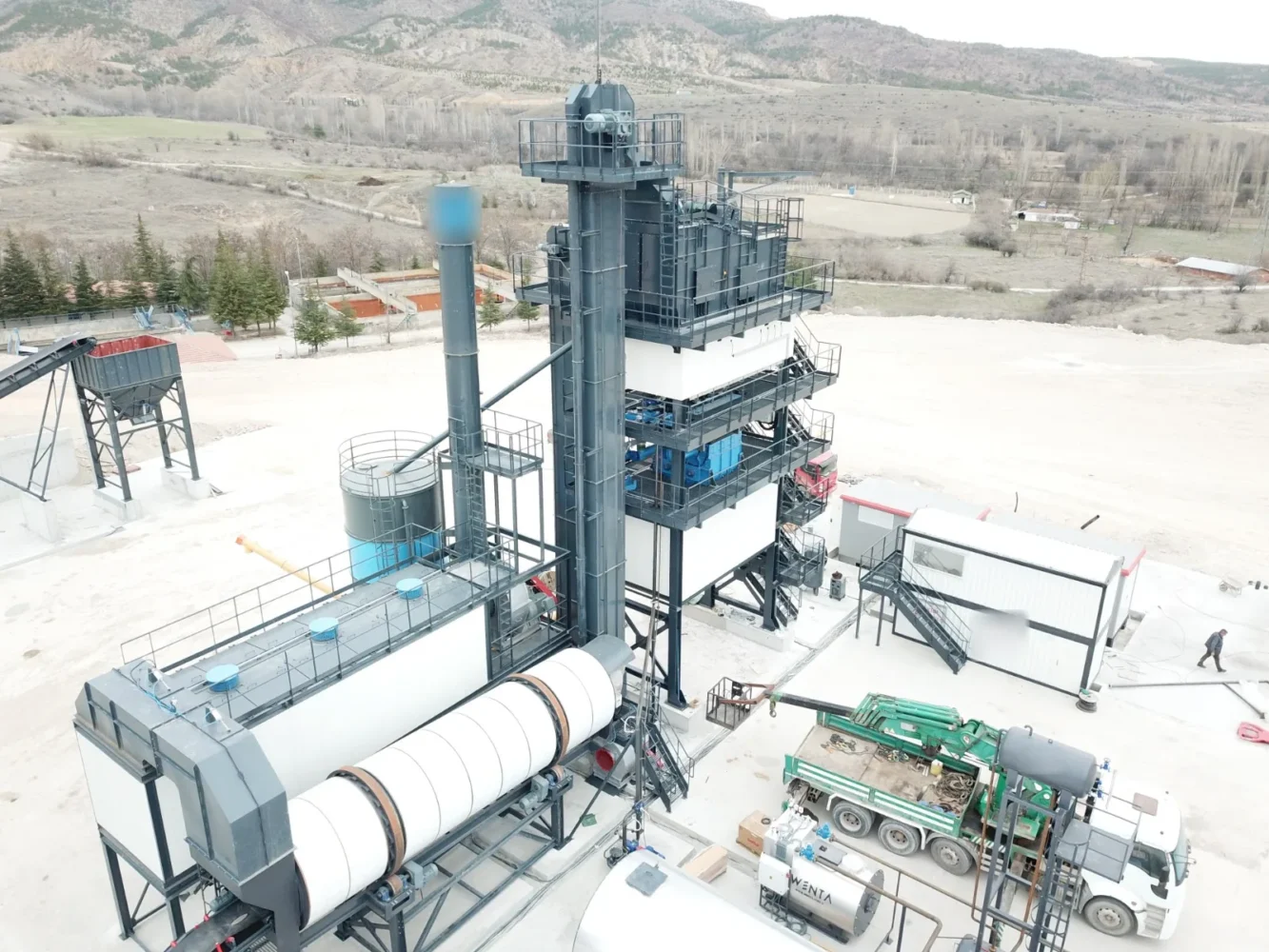
Both plant types share the front end (cold feed, dryer, dust collection) and the back end (bitumen supply, storage, load-out). They differ in how they mix.
| Component | What it does | Batch plant | Drum mix plant |
|---|---|---|---|
| Cold feed bins | Hold aggregate by size and meter it onto a collecting belt in the right proportions | Yes | Yes |
| Rotary dryer drum and burner | Dries the aggregate and heats it to mixing temperature | Yes (dryer only) | Yes (dries and, in many designs, mixes) |
| Dust collection (primary collector + baghouse) | Removes dust from the dryer exhaust; returns fines to the mix | Yes | Yes |
| Hot elevator | Lifts hot aggregate to the top of the mixing tower | Yes | No |
| Vibrating screen | Splits hot aggregate into size fractions | Yes | No |
| Hot bins | Store each hot fraction above the weigh hopper | Yes | No |
| Weigh hoppers (aggregate, filler, bitumen) | Weigh each ingredient for one batch | Yes | No (continuous metering instead) |
| Twin-shaft mixer (pugmill) | Mixes one batch at a time | Yes | No (some continuous plants use a separate continuous mixer) |
| Bitumen tank and heating (thermal oil heater) | Keeps bitumen hot and pumpable | Yes | Yes |
| Filler silo and elevator | Stores and doses mineral filler and reclaimed fines | Yes | Yes |
| Hot mix storage silo | Buffers between plant output and truck arrivals | Optional | Usually needed |
| Control cabin | Runs weighing, temperatures and recipes | Yes | Yes |
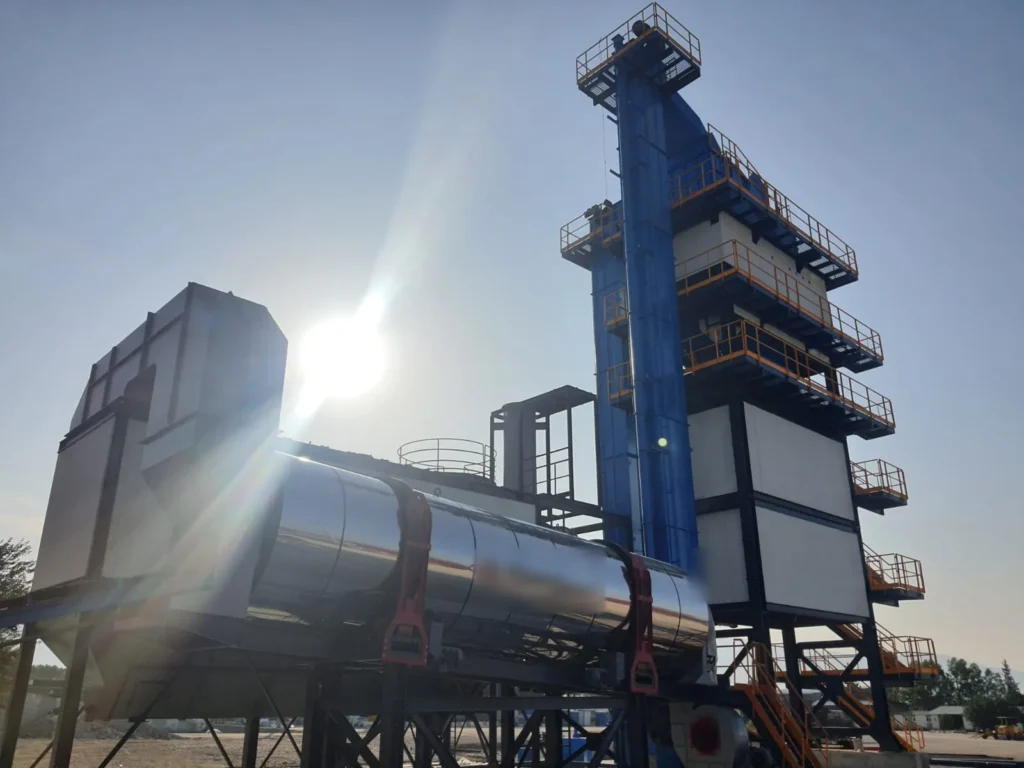
The dryer drum
The dryer is a sloped, rotating steel cylinder, typically 1.5 to 3 m in diameter and 6 to 12 m long. Steel flights inside lift the aggregate and drop it as a curtain through the hot gases from an oil or gas burner. Drum slope, speed, diameter and length set how long aggregate stays inside.
There are two airflow designs. In a parallel-flow dryer, aggregate and hot gas move in the same direction. In a counterflow dryer, they move in opposite directions. The paving handbook notes that counterflow dryers are more common because they transfer heat more efficiently.
Dust collection
Drying releases fine dust. Plants first pass the exhaust through a primary collector, such as a cyclone or settling chamber, to drop coarse dust. A baghouse (fabric filter) then catches the fines. The collected fines are usually weighed back into the mix as filler. A properly sized baghouse matters both for emission permits and for mix quality, because fines are part of the gradation.
How does a batch asphalt plant work?
A batch plant makes asphalt one weighed batch at a time.
- Cold feed: Loaders fill the cold bins. Belt feeders meter each size onto a collecting conveyor, which feeds the dryer.
- Drying and heating: The dryer removes moisture and heats the aggregate. Stockpiled aggregate typically holds 3 to 5% moisture by weight, according to the EPA.
- Lifting and screening: A bucket elevator carries hot aggregate to the top of the tower. A vibrating screen with a scalping deck and two to four sizing decks splits it into fractions.
- Hot bins: Each fraction drops into its own hot bin. Overflow pipes protect the screen if a bin overfills.
- Weighing: Aggregate is drawn bin by bin into a weigh hopper, coarsest first. Filler and baghouse fines are weighed separately. Bitumen is weighed in a heated bucket.
- Mixing: The aggregate is dry-mixed in a twin-shaft pugmill for 10 seconds or less. Bitumen is then sprayed in. The EPA notes that total mixing usually takes less than 60 seconds. Mixing time is set by the coating test AASHTO T 195 / ASTM D2489.
- Load-out: The batch drops into a truck or is carried to a hot storage silo.
Typical batch sizes range from about 900 to 4,500 kg, according to the paving handbook.
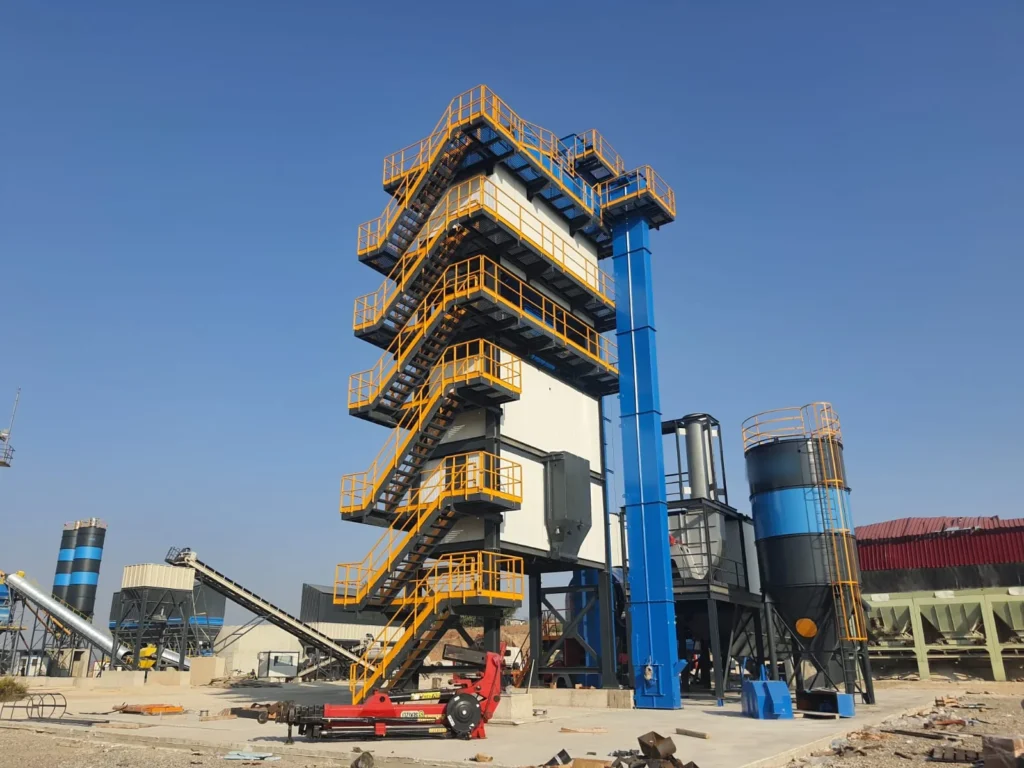
Why buyers choose batch plants
- Frequent mix changes: A batch plant can switch mix types from one truckload to the next. This suits contractors who supply several projects or produce wearing, binder and base courses on the same day.
- Tight control of each ingredient: Every batch is weighed, so gradation and binder content can be checked batch by batch.
- Specification fit: Batch plants allow hot-bin sampling, so each fraction can be checked against the job mix formula. Some contracts set requirements by plant type; check yours.
The trade-off is height, weight and complexity. The hot elevator, screen and hot bins add a tower, more moving parts and more foundations than a drum plant.
How does a drum mix (continuous) asphalt plant work?
A drum mix plant dries the aggregate and mixes it with bitumen in one continuous flow, without screens or hot bins.
- Parallel-flow drum mix: Aggregate enters at the burner end and moves with the hot gases. Bitumen is injected about halfway down the drum, in a cooler zone, together with any RAP and returned dust.
- Counterflow drum mix: Aggregate moves against the gas flow. The mixing zone sits behind the burner flame, so the bitumen does not touch the hottest gases. The EPA notes that counterflow plants can normally process RAP at up to 50% with little or no effect on emissions.
Because the cold feed proportions the aggregate directly, accurate cold feed calibration and consistent stockpiles are essential. Drum plants run continuously, so they almost always discharge into a storage silo.
How common is each type?
US data show the shift. In 1996, there were about 3,600 active plants in the US: roughly 2,300 batch, 1,000 parallel-flow drum and 300 counterflow drum plants. By then, counterflow drum plants made up about 85% of new plants being manufactured, according to the EPA’s emission factor documentation (AP-42).
Batch, drum mix or mobile: which plant fits your project?
| Question | Batch plant | Drum mix plant | Mobile plant |
|---|---|---|---|
| How often do you change mix type? | Several times a day | Rarely; long runs of one mix | Depends on design (mobile batch or mobile drum) |
| How often will the plant move? | Rarely (fixed site) | Rarely to occasionally | Every project or road section |
| Foundations and installation | Concrete foundations, crane work, longer erection | Lighter foundations | Minimal foundations; designed for road transport |
| RAP use | Limited without a separate RAP system | Suited to higher RAP rates (counterflow) | Depends on design |
| Storage silo | Optional | Usually required | Usually smaller or optional |
| Typical buyer | Commercial asphalt supplier, municipality, contractor with many clients | High-volume contractor on long, uniform jobs | Contractor following road projects |
Mobile asphalt plants are batch or drum plants mounted on chassis that can be towed by road. They usually come in smaller capacities than stationary plants in exchange for faster moves. If you move from one road project to the next, a mobile plant can save foundation and dismantling costs at each move.
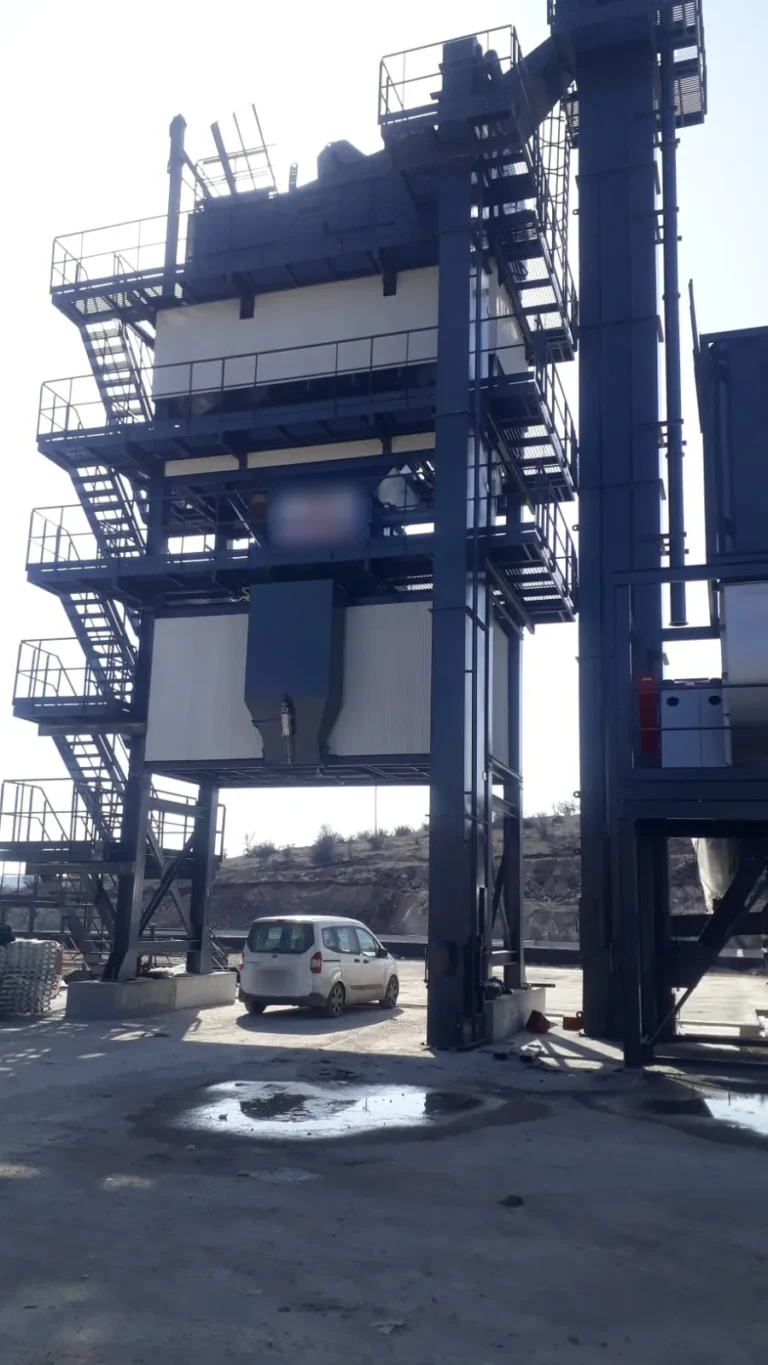
What does a real batch plant specification look like?
The table below shows the main specifications of one Turkish manufacturer’s stationary batch plant range. Values are per the manufacturer’s data and vary between manufacturers and configurations.
| Nominal capacity (t/h) | 80 | 100–120 | 160 | 240 | 300 |
|---|---|---|---|---|---|
| Mixer capacity (kg per batch) | 1,000 | 1,250 | 2,000 | 3,000 | 4,000 |
| Mixer drive (kW) | 2 × 15 | 2 × 18.5 | 2 × 22 | 2 × 37 | 2 × 55 |
| Hot elevator capacity (t/h) | 80 | 120 | 160 | 230 | 300 |
| Screen area (m², 5 decks) | 12 | 12 | 23 | 23 | 28 |
| Baghouse airflow (Nm³/h) | 28,000 | 30,000 | 44,000 | 58,000 | 78,000 |
| Baghouse filter area (m²) | 460 | 490 | 640 | 880 | 1,100 |
| Bitumen weigh hopper (kg) | 100 | 150 | 200 | 250 | 350 |
| Standard bitumen tank (m³) | 40 | 40 | 40 | 40 | 40 |
Two points help when you compare offers. Baghouse airflow rises with dryer throughput, so check that the filter is sized for the capacity you buy. And a single 40 m³ bitumen tank is a starting point; the number of tanks is set by your output and bitumen delivery schedule.
How to read nominal capacity
For a batch plant, hourly output is batch size × batches per hour. A 2,000 kg mixer running 80 batches an hour (a 45-second cycle) gives 160 t/h. Nominal capacity is quoted at standard conditions, usually about 5% aggregate moisture. Wetter aggregate forces the dryer to slow the feed, so real output falls. Ask every supplier at which moisture content, aggregate temperature rise and mix type the capacity is rated.
What temperature is hot mix asphalt produced at?
Hot mix asphalt is typically produced at about 138 to 171 °C (280 to 340 °F), according to the US Federal Highway Administration. Warm mix asphalt technologies, such as additives or foaming, lower this by about 20 to 30 °C. Warm mix made up 14.6% of European production in 2024, according to EAPA. The exact temperature depends on the bitumen grade and the specification; follow the bitumen supplier’s viscosity data and your road authority’s limits.
What fuels do asphalt plant burners use?
Most asphalt plant burners can fire either gas or liquid fuel. In the US, 70 to 90% of hot mix is produced with natural gas, according to the EPA. Burners can also run on propane, fuel oil or waste oil. Where natural gas is not available at the plant site, burners run on diesel or heavier fuel oils. Fuel choice affects burner design, fuel storage, emissions and running cost, so decide it before you order.
Can an asphalt plant use recycled asphalt (RAP)?
Yes. The EPA notes that virtually all plants being manufactured have RAP processing capability, and counterflow drum plants can normally take up to 50% RAP. In Europe, about 73% of the reclaimed asphalt available in 2024 was reused in new mixes, according to EAPA. Batch plants can add RAP through a separate feed, using RAP equipment (cold RAP into the mixer or a parallel RAP dryer), but the share is limited by how much heat the virgin aggregate can transfer. Check what your road authority allows before planning RAP use.
What this means for buyers in Africa and the Middle East
- Size the dryer for your real moisture, not the brochure. In rainy seasons, stockpile moisture can rise above the dryer’s rating. Covered stockpiles and good drainage protect output.
- Plan fuel and power together. Without grid gas, you need fuel storage for diesel or heavy fuel oil and, often, a generator set sized for the plant’s connected load.
- Plan bitumen supply. Bulk bitumen needs heated tanks and a thermal oil heater; bitumen in drums needs a drum decanter. See our bitumen guide.
- Match the plant to the specification. Read the contract: some ministries specify batch production, the mix design method (often Marshall), and limits on RAP and temperature.
- Budget for dust control. A baghouse is the usual way to meet dust limits in environmental permits. Check the limit at your site before you order.
- Stock wear parts. Mixer arms and liners, dryer flights, screen meshes, elevator buckets and filter bags wear in normal use. Order a first set of spares with the plant.
What drives the cost of an asphalt plant?
Prices vary widely by manufacturer, capacity and options, so compare offers line by line (see our step-by-step buying guide). The main cost drivers are:
- Plant type and nominal capacity (t/h)
- Mixer size and number of hot bins and cold feed bins
- Dryer and burner size, burner fuel type and fuel storage
- Baghouse size and emission level required
- Number and size of bitumen tanks and the heating system
- Storage silos, filler silo, RAP system and additive dosing
- Control system and automation level
- Steel structure, foundations, transport (number of containers or flat racks) and erection supervision
- Spare parts package, training and warranty terms
How VDA can help
VDA Trade Cooperation sources batch, drum mix and mobile asphalt plants and their components from Turkish manufacturers for buyers in Africa and the Middle East. Send us your target capacity, mix types, fuel and site conditions, and we will compare suitable offers with you. Browse our asphalt plant range. Request a quote or message us on WhatsApp.
Sources
- US EPA, AP-42 Section 11.1: Hot Mix Asphalt Plants (December 2000)
- AAPTP / NAPA, The Asphalt Paving Handbook: 4.1 Mix production, 4.4 Aggregate drying and heating, 4.5 Batch plants
- US FHWA, Warm-Mix Asphalt: European Practice
- EAPA, Asphalt in Figures 2024
- Pavement Interactive, HMA Batch Plant
- Manufacturer technical data for stationary batch plants (Türkiye), on file at VDA
Frequently asked questions
What is the difference between a batch plant and a drum mix plant?
A batch plant screens hot aggregate into bins, weighs each ingredient and mixes one batch at a time in a pugmill. A drum mix plant proportions aggregate at the cold feed and mixes it with bitumen continuously in or after the dryer drum.
How many tonnes per hour does an asphalt plant produce?
Stationary batch plants are commonly offered from about 80 to 300 t/h, and larger plants exist. Real output depends on aggregate moisture, mix type and how well trucks and paving keep up with the plant.
How long does it take to mix one batch of asphalt?
Dry mixing takes 10 seconds or less, and total mixing usually takes less than 60 seconds. The exact time is set by a coating test (AASHTO T 195 / ASTM D2489).
Is a mobile asphalt plant as good as a stationary plant?
A mobile plant can produce the same quality of mix. It usually has smaller storage and capacity per move, in exchange for faster relocation and lighter foundations.
What is the main factor that reduces asphalt plant output?
Aggregate moisture. Dryers are rated at about 5% moisture, and wetter aggregate must be fed more slowly, which lowers tonnes per hour and raises fuel use.